|
Hi Reader, it’s Donna. Each letter takes one behaviour and helps you understand the feeling underneath it. Today: when your child looks away, hides their face, or won’t quite meet your eyes.
It can leave you feeling shut out, wondering if they’re upset with you or pulling away. Often it means something quite different.
|
|
|
Looking away is often your child’s way of managing a closeness that feels like too much. |
|
|
WHAT IT LOOKS LIKE
Turning their head away, avoiding your gaze, hiding their face, closing their eyes, looking down when spoken to, especially after correction or in new situations.
|
|
|
WHAT'S REALLY HAPPENING
Eye contact holds intensity. It is where connection and emotion meet, and for some children that closeness feels too exposing. Too close, too vulnerable. Sometimes it is sensory, bright and overwhelming. Sometimes it carries shame or fear.
- When their gaze turns away, the body is protecting them, saying “let me find safety first.”
- It often shows up most after correction, during stress, or in unfamiliar places.
- Underneath the avoidance is one need: “help me feel safe before I let you all the way in.”
|
|
|
HOW TO RESPOND
Offer safety before you look for connection. Eye contact grows on its own once a child feels safe enough to give it.
- Sit beside them during play or talk, with no expectation of eye contact.
- Let closeness happen through shared activity, not by asking them to look.
- Make it an invitation, never a demand. “Look at me” closes the door; presence opens it.
- Stay real rather than performing. Your genuine, present self builds more safety than perfect composure ever could.
YOU MIGHT SAY:
“It feels too close right now.”
“It’s hard to see me when everything feels big.”
“I’m here even when you can’t look at me.”
“There’s no rush. Look when you’re ready.”
|
|
|
Each time you wait instead of insist, you rebuild the bridge of trust that eye contact represents. You are doing the brave work of staying present without forcing closeness. Their eyes will return, in their own time, to a place that has always felt safe. |
|
|
|
|
NOW FREE FOR EVERY PARENT
Get the full eye contact guide, and me in your pocket.
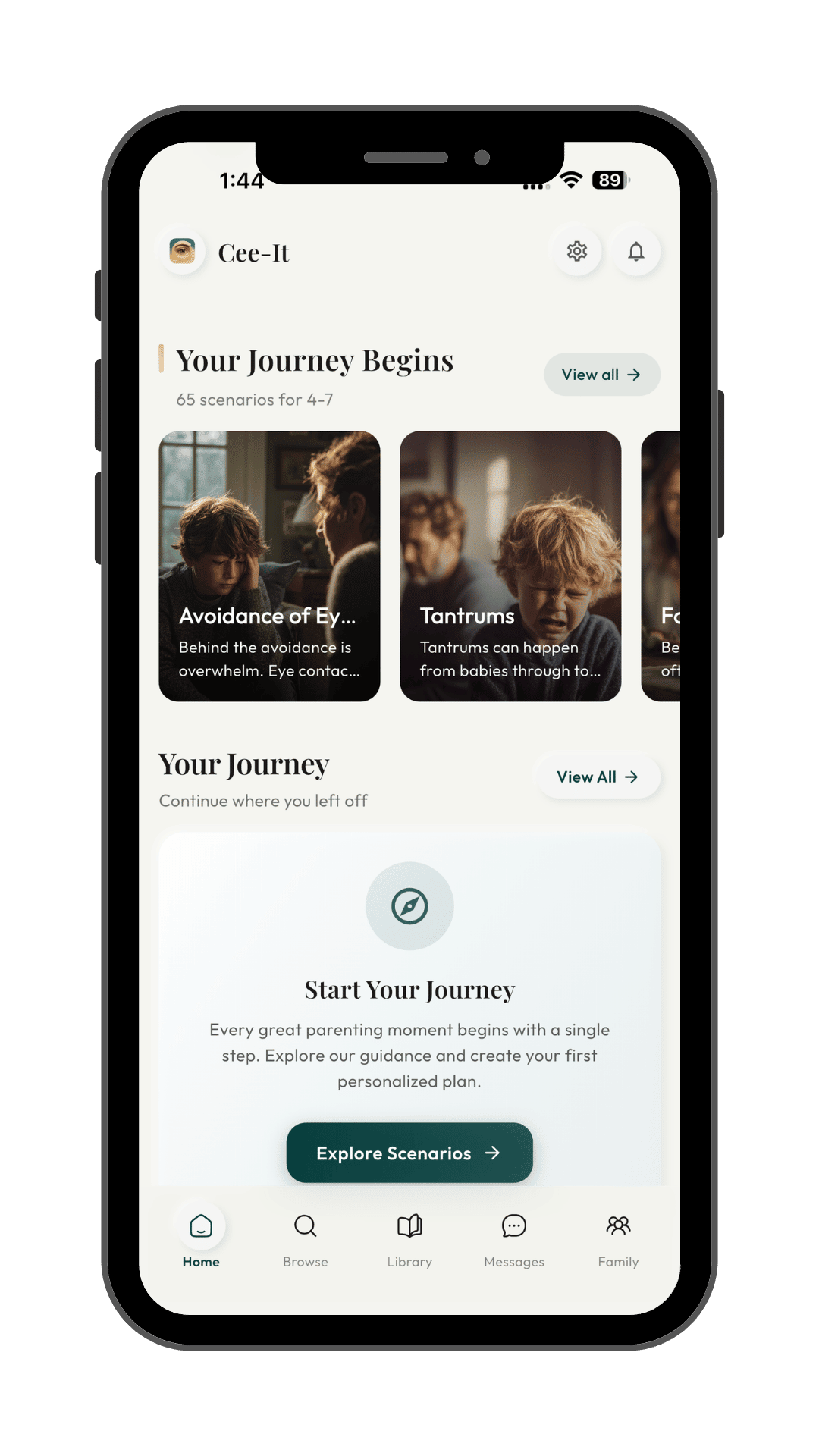
Cee-it walks you through mealtimes like these with a gentle 7-day plan and the words to say. And with Ask Donna, you can tell me what’s happening with your own child and I’ll help you understand it, your first three questions free.
|
|
|
|
| What should I decode next? |
|
|
|
|
|
|
|
See you in a fortnight,
|
|
Donna Rego
Founder, Interplay & Cee-It
Get the Cee-It App:
|
|
|
|
P.S. If you're ready to understand all of this properly, from the ground up, my Interplay Certification is where practitioners and parents go deeper. Learn more here → |
|
|
Trusted by professionals worldwide: 8,000+ therapists trained, over 1,000,000 families reached, 23+ years of clinical practice.
You’re receiving this because you joined Donna at a free event.
Interplay & Cee-it
Unsubscribe · Update preferences |
|
|
